
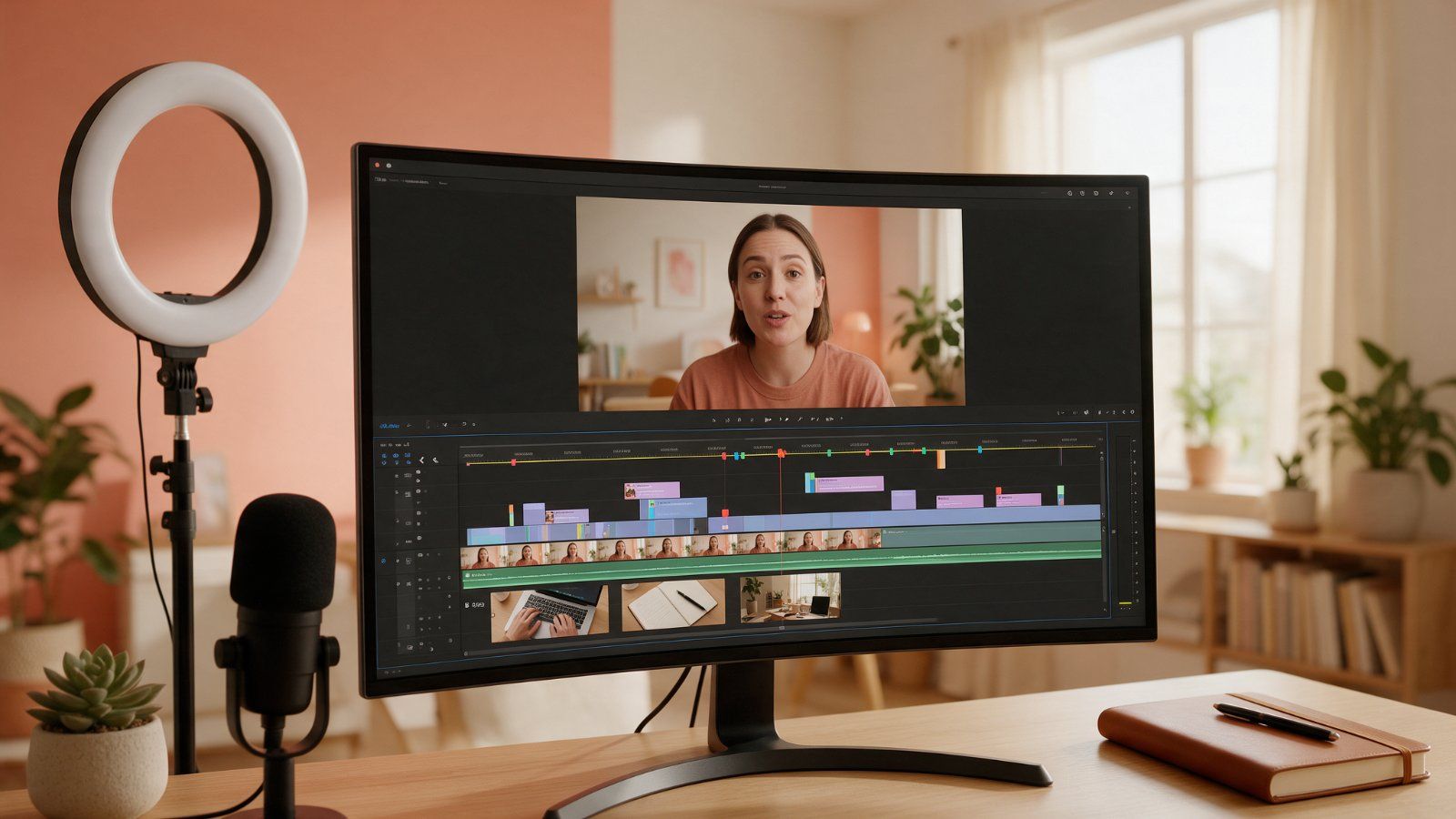
Talking head videos are simple to film: one person, one camera, one message. Editing them well is where most of the results come from. A good edit removes everything that slows the viewer down and adds only what helps them follow along. Here is the workflow that works for YouTube videos, online courses, LinkedIn and short form Reels, Shorts and TikTok.
1. Remove friction first
Before adding anything, cut what does not need to be there. Remove long pauses, false starts, "ums" and repeated lines. These jump cuts make the video tighter and keep information coming, which is the biggest single boost to retention.
2. Add captions early
Captions are not just for accessibility. Many people watch with the sound off, especially on Reels and LinkedIn. Adding captions early also shows you the pacing: every gap and every long sentence becomes easy to spot. Keep caption chunks short and highlight key words.
3. Write a hook for the first 3 seconds
Open with the most interesting line, not a greeting. Add hook text on screen that states the promise of the video. On short form platforms, the first 3 seconds decide whether anyone sees the rest.
4. Use B-roll with a purpose
Add B-roll only where it helps the viewer understand or stay engaged: showing a product, an example, a place or a result. Random stock clips distract more than they help.
5. Add motion graphics for key points
Numbers, steps and comparisons are hard to follow when someone just says them. Simple motion graphics like animated text, icons, charts or a split screen turn those moments into something people remember.
6. Use punch-ins and pacing changes
A slight zoom on important lines, a change of framing between sections and a quicker rhythm in the middle of the video stop it from feeling static, even when it is one shot.
7. Finish with sound design
Clean up the voice, keep music low under speech and add light sound effects on transitions and on-screen text. Good audio makes a talking head video feel professional more than anything else.
Long form vs short form
- Long form (YouTube, courses): 16:9, chapters, slower pacing, more B-roll and explainer graphics.
- Short form (Reels, Shorts, TikTok): 9:16, faster cuts, bigger captions and one idea per video.
See real examples in the talking head video portfolio.
About the author: Mahadi Hasan is a Visual Storyboard, Motion Designer & Video Editor based in Dhaka, Bangladesh. He creates performance video ads, SaaS explainer videos and talking head edits, in long or short form. See his talking head video portfolio or get in touch.