Scroll through LinkedIn for five minutes and you will notice a clear pattern. The posts that stop you mid-scroll aren't walls of plain text or generic stock photos. They are videos of someone talking directly into the camera, sharing a real lesson, an opinion, or a behind-the-scenes story in their own voice. No fancy Hollywood production. Just a person, a phone, and something worth saying.
That format has a name: talking head video. And it has quietly become one of the most effective tools founders, consultants, and creators use to build a personal brand that actually gets noticed.
In this guide hosted on mahadihasan.space, you will learn why using talking head videos for personal branding works so well on LinkedIn, how to script and record them without overthinking, where they fit into a broader personal branding strategy, and how to avoid the common traps that make most video content fall flat.
What Is a Talking Head Video, Exactly?
A talking head video is straightforward. A person speaks directly to the camera lens, usually framed from the chest or shoulders up, with clean cuts and subtitle captions. No complex animation, no elaborate studio set, and no hired actors. Just you, breaking down something you know inside out.
What makes this format powerful is not high production value, but its directness. The lack of glossy polish actually works in your favor. Viewers trust a human face and an authentic voice far more than they trust a slide deck or corporate graphics. It feels like a real conversation, not a broadcast advertisement.
Why Talking Head Videos Drive LinkedIn Video Marketing Success
1. People Buy From People, Not Logos
LinkedIn is a professional network, but it is ultimately made of individual human beings scrolling on their phones. They decide in half a second whether to keep watching or keep moving. A well-delivered talking head clip creates a personal connection that a static graphic simply cannot replicate. This forms the backbone of effective LinkedIn video marketing. It puts a human face in front of your prospective clients instead of a faceless corporate entity.
2. The Algorithm Favors Native Video Engagement
LinkedIn's algorithm favors content that keeps users engaged on the platform longer. Native videos, especially short and concise talking head clips, regularly achieve broader organic reach than plain external links. You do not need fancy visual tricks to benefit from this. You just need consistency and a clear, valuable point in every clip.
3. Visual Familiarity Compounds Over Time
The first time someone sees your video in their feed, they might not remember your name. By the fifth or sixth time, they recognize your face before they even read your post caption. That instant recognition is the real growth engine behind a long-term personal branding strategy built on video.
How Talking Head Videos Help You Build Authority on LinkedIn
Authority is rarely built through a single viral post. It is built through consistent, visible proof that you know your craft, delivered in a way that people can digest easily.
A short video lets you demonstrate real-time expertise, such as explaining a concept, dissecting a mistake, or answering a question your target audience is actively asking. Text claims expertise; video demonstrates it through your voice inflection, clarity, and posture.
This is critical when producing video content for founders. Whether you are pitching to investors or serving clients in tech hubs like Dhaka, founders must establish trust fast. A tight 60-second video does more to build authority on LinkedIn than a long-winded "About Us" section ever could.
How to Script a Video That Doesn't Feel Read
The best talking head videos sound natural and conversational, not recited like a script. Use these structural guidelines:
Skip the Fluff: Never start with "Hi guys, today I want to talk about..." Open directly with your main hook, such as the challenge, the mistake, or the core insight.
Use Bullet Points, Not Full Sentences: Reading word-for-word makes you look robotic. Outline 3 key talking points on paper so your delivery remains organic.
Focus on One Idea: Do not try to pack three complex industry topics into one minute. Pick one specific problem and answer it completely.
The 60-Second Video Blueprint
Hook (0 to 5 Seconds): State the core problem or shocking insight immediately.
Context & Value (5 to 45 Seconds): Deliver 2 or 3 actionable points without filler.
Call to Action (45 to 60 Seconds): Ask a direct question to spark comment discussion.
Studio Setup, Budget Equipment, and Delivery Tips
You do not need a multi-thousand-dollar studio. A decent smartphone, a quiet room, and good lighting cover 90% of what actually matters.
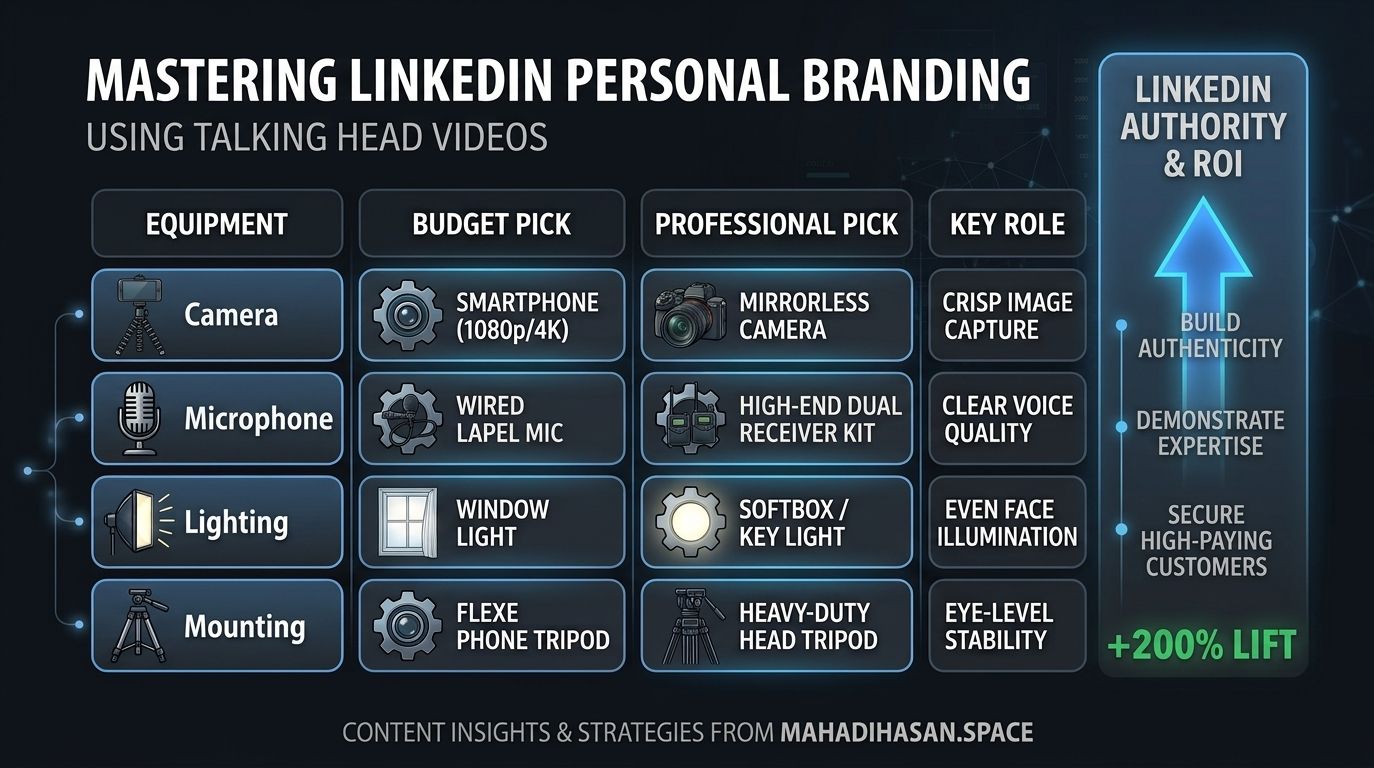
Position at Eye Level: Looking down at a camera feels distant. Eye-level framing creates a natural, peer-to-peer conversation.
Prioritize Clear Audio: Audiences will forgive average video quality, but bad, echoey audio causes viewers to drop off instantly.
Always Include Captions: Over 70% of LinkedIn users scroll with their sound muted. Always burn text captions onto your video.
Where Video Fits Into Your Broader Personal Branding Strategy
Video works best as part of a content ecosystem, not as an isolated effort:
Post Consistently over Perfectly: One clean video per week posted consistently outpaces five videos dropped in a single week and then abandoned.
Repurpose Content: Convert your video script into a text-only LinkedIn post, a short quote graphic, or an email newsletter issue.
Mix Your Formats: Combine talking head videos with text posts, carousel PDFs, and screen recordings to keep your feed fresh.
Common Mistakes That Ruin Talking Head Videos
Rambling Past 90 Seconds: Retention drops fast after the first minute. Edit ruthlessly.
Hiding the Hook at the End: If your best point is in the last 10 seconds, most people will never hear it.
Forgetting Captions: Skipping captions isolates silent scrollers.
Inconsistent Uploads: Sporadic posting makes it hard for both your network and the LinkedIn algorithm to recognize your presence.
Related reading: Why Talking Head Videos Are the Fastest Way to Build Personal Brand Trust.
Frequently Asked Questions (FAQs)
What is a talking head video used for in personal branding?
It is used to humanize your online presence, build trust, and demonstrate your domain expertise directly to your ideal audience without relying on corporate graphics or written posts alone.
How long should a talking head video be for LinkedIn?
The sweet spot is between 45 and 90 seconds. It is long enough to deliver an actionable tip, but short enough to hold a viewer's full attention.
Do I need expensive equipment to start recording?
Not at all. A modern smartphone camera, natural light from a window, and a basic lapel microphone are more than enough to produce high-performing videos.
How often should I post talking head videos on LinkedIn?
Aiming for 1 to 2 videos per week published consistently yields better algorithm traction and audience recall than posting daily for a week and stopping.
Final Thoughts
Building a strong brand does not require a production studio or scripted line readings. It simply requires showing up consistently, on camera, with insights your audience finds useful. Talking head videos for personal branding work because they eliminate the barrier between you and your potential clients or partners.
Grab your phone, outline a quick tip from your daily experience, press record, and upload your first clip this week.
Ready to scale your personal brand with structured video marketing? Explore more strategies on mahadihasan.space or get in touch with our team today for a custom content audit and video marketing strategy.
About the author: Mahadi Hasan is a Visual Storyboard, Motion Designer & Video Editor based in Dhaka, Bangladesh. He creates performance video ads, SaaS explainer videos and talking head edits, in long or short form. See his talking head video portfolio or get in touch.