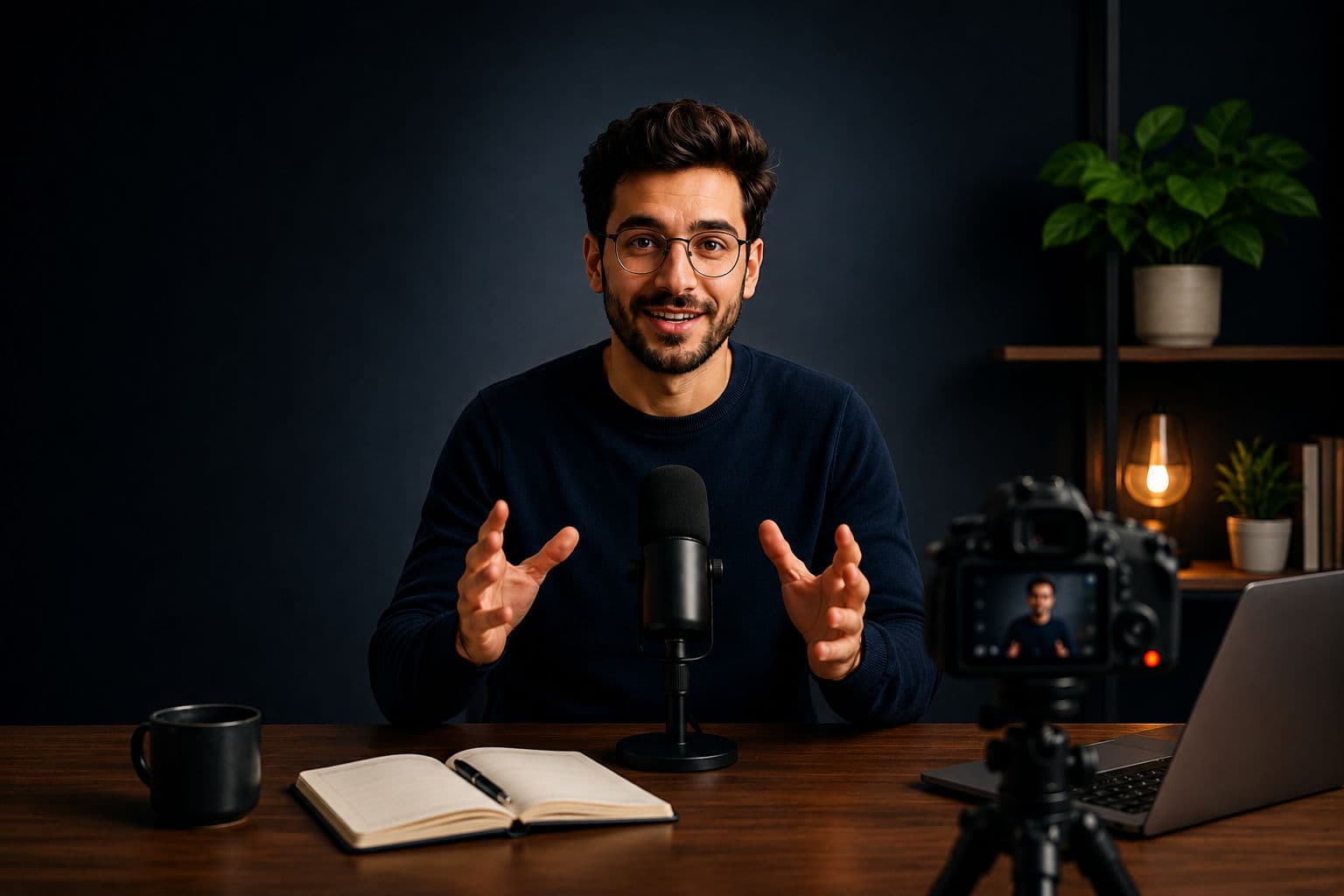
Trust used to take months or even years to build online. A blog post here, a few LinkedIn comments there, maybe a podcast appearance down the line. Piece by piece, a stranger slowly became someone people recognized and believed. That traditional approach still works, but it's slow, and most modern founders, creators, and professionals don't have the luxury of waiting a year for their audience to warm up to them.
In an online world saturated with polished AI-generated copy, stock imagery, and automated messages, human connection has become the real currency. Audiences no longer just want to know what you offer; they want to know who's behind the message.
Using a talking head video for personal branding shortcuts that trust-building process in a way almost no other format can. A talking head video is simple: a direct-to-camera recording where you share insights, tell stories, or offer solutions directly to your audience. Despite that simplicity, seeing a real person speak, noticing their tone, pace, and micro-expressions, signals credibility far faster than reading their written words ever could.
In this guide, you'll learn the psychology behind camera-driven trust, how to produce authentic video content without expensive gear, and how to build a repeatable strategy that turns cold viewers into people who actually believe you.
Why Seeing a Real Person Builds Trust Faster Than Text
We're Hardwired to Process Faces and Voices
Humans have been reading faces, gestures, and voices for social cues far longer than we've been reading written text. When a viewer watches you speak, their brain processes dozens of subtle trust signals at once: natural pauses, eye contact, tone, and non-verbal cues.
This is part of what psychologists call a parasocial interaction, a dynamic where consistent exposure to someone creates a genuine sense of familiarity and rapport, even though the relationship only runs one way. A written post can't replicate that. It's why a founder update recorded straight to camera tends to land with more emotional weight than the exact same message typed out as a caption.
Video Removes Communication Ambiguity
Text leaves a lot of room for interpretation. Is the author confident or arrogant? Genuine or performative? Direct-to-camera video removes that ambiguity almost instantly.
Learning to build trust with video means doing more than delivering information. It means letting people see how you actually think and communicate. It reveals personality and intent in a way that's difficult to fake convincingly over the long run.
What Makes a Talking Head Video Specifically Effective
Not all video formats build personal trust equally. A heavily produced ad with hired actors or slick graphics doesn't carry the same weight as a founder speaking plainly into their own camera.
High Authenticity: Talking Head / Direct-to-Camera Video. Raw, personal, direct trust signals that establish immediate personal authority.
Lower Personal Connection: Faceless Animation / Stock B-Roll. Great for technical or tutorial content, but lacks the human presence and eye contact that build trust quickly.
1. It's the Most Direct Medium Available
Talking head videos work because they're unfiltered by comparison. There's no middleman, no third-party voiceover, no logo hiding your face, just you, delivering your perspective directly to the viewer. That directness makes it feel like a conversation between peers rather than a pitch.
2. It Signals Real Accountability
There's a quiet psychological effect at play when you show up on camera regularly. It signals that you stand behind your work. For consultants, agency leads, and founders, that visibility becomes part of your credibility, almost independent of what any single video is even about.
3. It Tends to Hold Attention Longer
Platforms like LinkedIn, YouTube, Instagram, and TikTok generally favor content that keeps people watching. Direct-to-camera videos that hook viewers early tend to hold attention longer than static posts, which can help with organic reach over time.
4. Global Reach, Delivered Locally
A personal branding video lets you build a reputation far beyond your own city or country. For creators, strategists, and entrepreneurs, including work coming out of studios based in Dhaka, Bangladesh, clean, professional talking head content closes the geographic gap, letting you compete on expertise and quality with peers anywhere in the world. See how this looks in practice on the Mahadi Hasan portfolio.
The Role of Authentic Video Content in Personal Branding
Polish Isn't the Point. Consistency Is.
One of the more counterintuitive truths about authentic video content is that too much production polish can actually work against you. A slightly imperfect, naturally spoken video often builds more trust than a glossy, heavily scripted one. Viewers tend to read small imperfections, an unscripted laugh, a natural pause, an ordinary background, as signs of honesty rather than performance.
Authenticity Is a Pattern, Not a Single Video
No single video permanently builds a personal brand. Trust builds through a pattern: the same voice, real experiences, showing up regularly over weeks and months. That compounding effect of a recognizable, real presence is the actual engine behind why talking head video works as well as it does.
How Talking Head Videos Compare to Other Formats
Speed of trust building: Talking head video is fastest, thanks to immediate visual and vocal cues. Faceless or screen-share content is moderate. Written posts build trust more gradually.
Personal connection: Talking head video is highest, largely due to direct eye contact. Faceless content is lower. Written posts sit in between.
Production friction: Talking head video and faceless content are both low; a phone and a decent mic cover most needs.
Repurposing value: Talking head video repurposes the most easily into text, audio, and short clips, while written posts require the most expansion to turn into other formats.
A complete strategy usually mixes formats, but direct-to-camera video remains the fastest single lever for personal recognition.
(Internal linking opportunity: link to the LinkedIn-focused talking head video post here, for platform-specific tactics.)
Step-by-Step: How to Shoot Your First Talking Head Video
You don't need a multi-thousand-dollar cinema setup to start. Message clarity, decent lighting, and clean audio matter far more than expensive gear.
Step 1: Prioritize Audio and Lighting
Audio is non-negotiable. Viewers will tolerate average video resolution, but they'll drop off fast if the audio echoes or sounds muffled. A simple USB mic or wireless lapel mic makes an immediate difference.
Lighting should face you, not sit behind you. A ring light or a bright window in front of your face works well. Avoid strong backlighting that turns your face into a shadow.
Step 2: Set Frame and Eye-Level Alignment
Position the camera at eye level. Looking down into a laptop camera creates an awkward, distant dynamic, while eye-level framing feels more like an equal conversation. Keep your shoulders in frame with a little headroom above.
Step 3: Speak to One Person, Not a Crowd
Look directly into the lens as if you're talking to a single colleague or friend, not addressing an audience. If you're using notes, keep them close to the lens so your eyeline stays natural.
How to Overcome Camera Shyness and Build Trust Faster
The real barrier to talking head video is rarely technical. It's almost always hesitation about being on camera. Feeling awkward in your first few recordings is completely normal.
Start with topics you know without notes. Explaining something unfamiliar on camera tends to produce stiff, hesitant delivery. Familiar territory lets your natural voice come through.
Shift the focus outward. Move from "how do I look and sound" to "how does this help the person watching." When the goal is delivering value, self-consciousness tends to fade.
Work from bullet points, not a full script. Reading word-for-word strips out natural cadence and makes delivery sound robotic. Three or four core points, spoken freely, keep things conversational.
Be specific, not generic. Vague advice doesn't build trust because it doesn't reveal anything real about your expertise. Real outcomes, specific mistakes, clear opinions: these are what make a video feel like it's actually coming from a person.
Keep a simple, repeatable cadence. One solid video a week, posted consistently, builds a stronger trust pattern than five videos in one weekend followed by a month of silence.
Related reading: How to Build a Strong Personal Brand on LinkedIn Using Talking Head Videos.
Frequently Asked Questions
Why do talking head videos build trust faster than other content formats? They let viewers read voice tone, facial expression, and non-verbal cues in real time, trust signals that plain text and static graphics simply can't replicate.
Do I need to be a polished public speaker for this to work? No. Slightly imperfect, genuine delivery often builds more trust than an overly scripted video, since it reads as real communication rather than a pitch.
What's the ideal length for a personal branding video? For social feeds like LinkedIn, Instagram, or TikTok, 60 to 90 seconds tends to work well. For a deeper dive on YouTube or a website homepage, 5 to 10 minutes can deliver more value without losing attention.
Should I script my talking head videos word-for-word? Simple bullet points generally work better than a full script. Reading line by line tends to sound stiff, while bullet points keep delivery natural while still staying on track.
How can I make talking head videos work if I'm uncomfortable on camera? Camera confidence is a skill built through repetition, not something you either have or don't. Start with short, private practice videos on topics you know well, and comfort tends to grow from there.
Turn Your Expertise Into an Authentic Personal Brand
Trust isn't built overnight with a new logo, a slogan change, or corporate-sounding copy. It builds through repeated exposure to a real person. That's exactly why a talking head video for personal branding is one of the fastest paths to market authority: it compresses the slow process of getting to know someone into a format people can connect with in seconds.
Pick a question your clients ask you often, set your phone up at eye level, press record, and share your perspective today.
Want help turning your expertise into video content that actually builds trust? Get in touch for a free consultation. We'll help you plan a video strategy that fits your voice, your comfort level on camera, and your growth goals.
About the author: Mahadi Hasan is a Visual Storyboard, Motion Designer & Video Editor based in Dhaka, Bangladesh. He creates performance video ads, SaaS explainer videos and talking head edits, in long or short form. See his talking head video portfolio or get in touch.